How to Re Season Blackstone Griddle: Ultimate Guide for Perfect Coating

If you want your Blackstone griddle to cook like new every time, re-seasoning is a must. Over time, the cooking surface can lose its non-stick coating, develop rust, or start flaking.
But don’t worry—re-seasoning your griddle is easier than you think, and it brings back that smooth, durable surface you love. In this guide, you’ll learn simple, step-by-step tips to clean off rust, apply the right oils, and build a long-lasting seasoning layer.
Keep reading, and you’ll have your Blackstone griddle ready to deliver perfect meals again and again.

Credit: www.youtube.com
Preparing The Griddle Surface
Preparing the griddle surface is a crucial step in re-seasoning your Blackstone griddle. A clean and dry surface helps the oil bond properly, creating a smooth, non-stick cooking area. Skipping this step can lead to uneven seasoning or food sticking to the griddle.
Follow these simple steps to ready your griddle for seasoning. Clear off any debris and old food particles. Remove rust spots carefully. Make sure the surface is fully dry before applying oil. This preparation ensures a long-lasting and effective seasoning layer.
Initial Cleaning Steps
Start by washing the griddle with warm water and mild soap. Use a soft cloth or sponge to avoid scratching the surface. Rinse thoroughly to remove all soap residue. Dry the griddle with a clean towel. This removes grease and leftover food.
Next, scrape the surface using a metal scraper or spatula. Focus on loose rust and stuck-on bits. Clean the corners and edges well. This step creates a smooth base for seasoning.
Removing Rust Effectively
Pour white vinegar over any rusted spots. Let it soak for about one hour. The vinegar helps dissolve the rust naturally. Use steel wool or a scrub pad to scrub the rust away. Scrub gently to avoid damaging the griddle.
Rinse the griddle thoroughly with water to remove vinegar and rust residue. Repeat the process if rust remains. Removing rust fully prevents seasoning problems later.
Drying The Griddle
Dry the griddle completely after cleaning. Use a towel to wipe off excess water. Then, turn on the burners and heat the griddle. Let it warm up until all moisture evaporates. A dry surface is essential for oil to bond well.
Heating also helps kill bacteria and prepare the metal for seasoning. Only apply oil once the griddle is fully dry and warm. This step ensures a strong, even seasoning layer.
Choosing The Right Oil
Choosing the right oil is key to re seasoning your Blackstone griddle. The oil creates a protective, non-stick layer. This layer keeps food from sticking and protects the metal from rust. Not all oils work well for seasoning. The best oils have a high smoke point and form a strong, durable coating.
Using the proper oil ensures your griddle lasts longer. It also helps maintain even cooking temperatures. Oils with low smoke points can burn and leave a sticky residue. This can ruin the seasoning and taste of your food. Pick oils that stay stable under high heat.
High Smoke Point Oils
High smoke point oils are perfect for seasoning griddles. These oils can handle the heat without burning. Examples include canola, vegetable, and grapeseed oils. They create a tough, smooth surface after heating. This surface resists rust and food sticking. Avoid oils like olive oil or butter, which burn easily. Use oils rated above 400°F smoke point for best results.
Benefits Of Flaxseed And Canola Oil
Flaxseed oil is popular for seasoning because it dries hard. It forms a strong, durable layer that sticks well. This oil polymerizes, making a smooth finish. Canola oil also works well. It has a high smoke point and is affordable. Canola oil creates a stable, non-stick coating. Both oils help your griddle stay rust-free. They also improve cooking performance by creating a slick surface.
Applying The Seasoning
Applying the seasoning is a key step in restoring your Blackstone griddle’s cooking surface. It protects against rust and creates a smooth, non-stick finish. Proper seasoning improves heat distribution and makes cleaning easier.
This process involves coating the griddle with oil and heating it to bond the oil to the metal. Repeating this step builds a strong, durable layer. Focus on even coverage and correct timing for the best results.
Oiling While Warm
Apply oil when the griddle is still warm but not hot. This allows the oil to spread easily and soak into the pores of the metal. Use a high-smoke-point oil like canola or flaxseed for best results.
Pour a small amount of oil onto the surface. Use a clean cloth or paper towel to spread it evenly. Make sure to cover the entire cooking area, including edges and corners.
Even Oil Layer Technique
Keep the oil layer thin and uniform. Thick layers can become sticky or uneven after heating. Use just enough oil to create a light sheen on the surface.
After applying the oil, heat the griddle until the oil starts to smoke lightly. Turn off the heat and let the griddle cool. Wipe off any excess oil with a clean towel.
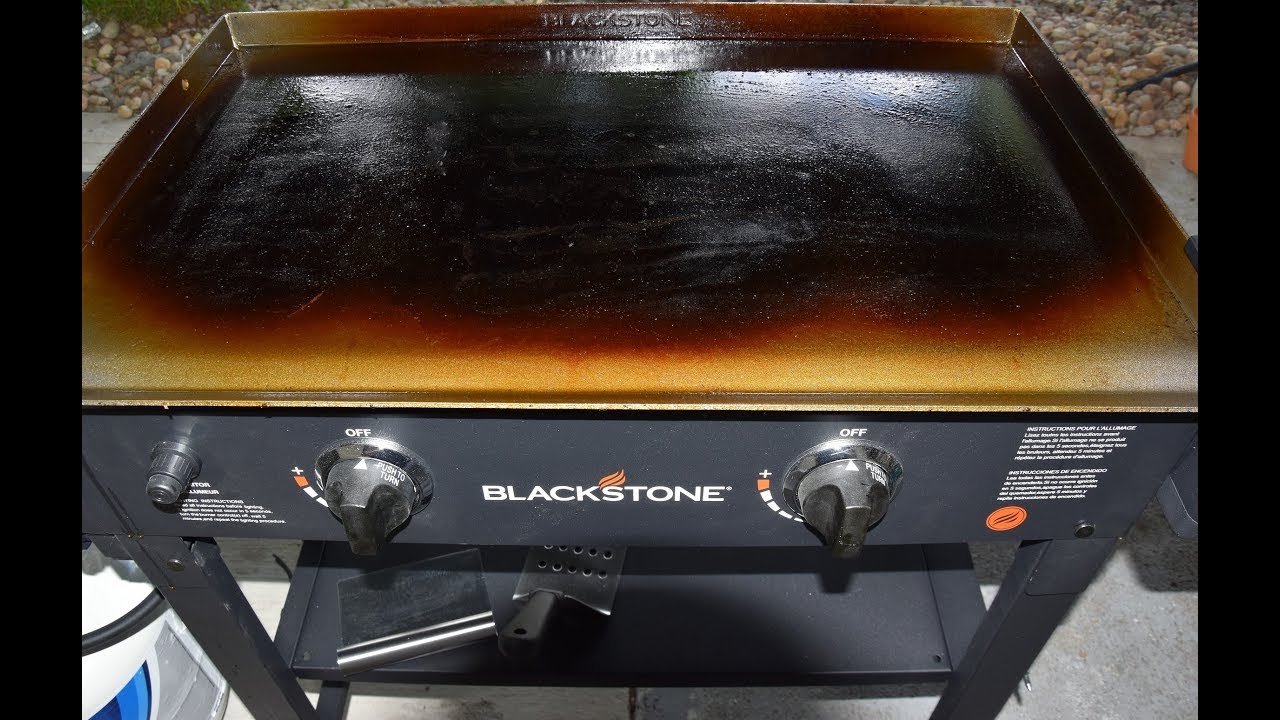
Repeat this oiling and heating process 3 to 5 times. Each layer adds strength to the seasoning. A well-seasoned griddle looks dark and smooth with a slight shine.

Credit: www.thegrillcoach.com
Heating And Building Layers
Heating and building layers is a key step in reseasoning your Blackstone griddle. Proper heat helps the oil bond with the metal. This creates a strong, non-stick surface. Multiple layers build durability and protect the griddle from rust. Each layer adds to the smooth cooking surface you want.
Proper Heating Method
Start by heating the griddle on medium heat. Let it warm evenly for 10 to 15 minutes. Avoid very high heat to prevent burning the oil. The surface should be hot enough to smoke lightly. This smoke shows the oil is bonding with the metal.
Repeating The Seasoning Process
After heating the first layer, let the griddle cool down. Wipe off any excess oil with a clean towel. Apply a thin new layer of oil. Heat again using the same method. Repeat this process 3 to 5 times. Each layer strengthens the seasoning and adds shine.
Using A Torch For Edges
Edges and corners can be hard to season with burners alone. Use a propane torch to heat these areas evenly. Move the flame slowly to avoid overheating. Apply oil carefully to the edges while heating. This ensures the entire griddle is protected and seasoned well.
Maintaining The Seasoning
Maintaining the seasoning on your Blackstone griddle keeps it cooking smoothly and protects it from damage. A well-maintained seasoning layer creates a natural non-stick surface. It also prevents rust and extends the life of your griddle. Simple daily care helps your griddle perform its best every time you cook.
Cleaning After Each Use
Clean the griddle while it is still warm but not hot. Use a metal scraper to remove food bits and grease. Wipe the surface with a paper towel or cloth. Avoid using soap because it can strip the seasoning. If needed, add a little water to loosen stuck food. Dry the surface completely before storing.
Preventing Rust Formation
Rust forms when moisture stays on the metal surface. Always dry the griddle well after cleaning. Apply a thin layer of cooking oil to the surface to protect it. Use oils with high smoke points like canola or flaxseed oil. Store the griddle in a dry place and cover it when not in use. This prevents moisture from causing rust.
Touch-up Seasoning Tips
Touch up the seasoning regularly to keep it strong. Heat the griddle on medium heat before applying oil. Use a paper towel to spread a thin, even layer of oil over the surface. Let the griddle heat until the oil starts to smoke. Turn off the heat and allow it to cool. Repeat this process two to three times for best results. This builds a smooth, protective coating on your griddle.
Credit: www.thegrillcoach.com
Frequently Asked Questions
How To Remove Rust And Re Season Blackstone Griddle?
Scrape loose rust with a metal scraper. Soak rust spots in white vinegar for an hour. Scrub with steel wool, rinse, and dry. Apply a thin layer of high-smoke-point oil on the warm griddle. Heat and wipe off excess oil.
Repeat oiling and heating 3-5 times to re-season.
How To Remove Old Seasoning From Blackstone?
Scrape the surface to remove loose seasoning. Clean with warm soapy water and rinse. Soak rusted areas in white vinegar for an hour. Scrub with steel wool, rinse, and dry thoroughly. Apply a thin layer of cooking oil, heat, then wipe off excess.
Repeat oiling three to five times.
What Is The Best Oil To Reseason A Blackstone Griddle?
The best oil to reseason a Blackstone griddle is flaxseed or canola oil. Both have high smoke points and create a durable, non-stick surface. Apply a thin layer on a warm griddle, heat it, then wipe and repeat 3-5 times for optimal seasoning.
What Are Signs Of A Poorly Seasoned Griddle?
Signs of a poorly seasoned griddle include food sticking, uneven cooking, rust spots, and a dull, flaky surface. The griddle may also appear sticky or sticky residue may build up after cooking.
Conclusion
Re-seasoning your Blackstone griddle keeps it ready for great cooking. Clean the surface well to remove rust and old residue first. Apply a thin layer of oil evenly while the griddle is warm. Heat the oil and let it bond to create a non-stick layer.
Repeat the oiling and heating several times for best results. This simple routine protects your griddle and improves food flavor. Regular care ensures your Blackstone lasts longer and cooks better every time. Enjoy cooking with a smooth, well-seasoned griddle!