How to Clean Your Blackstone Griddle After Cooking: Easy Expert Tips
You love cooking on your Blackstone griddle—it’s quick, tasty, and perfect for everything from breakfast to dinner. But what about after the fun is over?
Cleaning your griddle the right way is key to keeping it in great shape and ready for your next meal. If you’ve ever struggled with stubborn food bits or wondered how to protect that seasoned surface, this guide is for you.
Keep reading to discover a simple, step-by-step method that will make cleaning your Blackstone griddle fast, easy, and effective every single time. Your griddle—and your future meals—will thank you!

Credit: frommichigantothetable.com
Prepare The Griddle
Preparing your Blackstone griddle properly makes cleaning easier and more effective. This step helps remove food residue and grease before they harden. Follow simple actions to get your griddle ready for cleaning.
Heat The Surface
Turn on the griddle to high heat after cooking. Heating loosens stuck food and grease. It softens residue, making scraping easier. Let the surface get hot but not smoking. This step is key to a thorough clean.
Gather Cleaning Tools
Collect all cleaning tools before you start. You need a metal scraper to remove food bits. Have paper towels or cloths ready for wiping. A small container of water helps steam clean stubborn spots. Cooking oil is useful for seasoning after cleaning.
Remove Food Debris
Removing food debris is the first step in cleaning your Blackstone griddle after cooking. Leftover bits can burn and stick, making the griddle harder to clean later. Clearing these scraps keeps your cooking surface smooth and ready for the next meal.
Cleaning debris right after cooking saves time and effort. It also helps maintain the griddle’s seasoning and prevents rust. Use simple tools and techniques to remove all stuck-on food easily.
Use A Metal Scraper
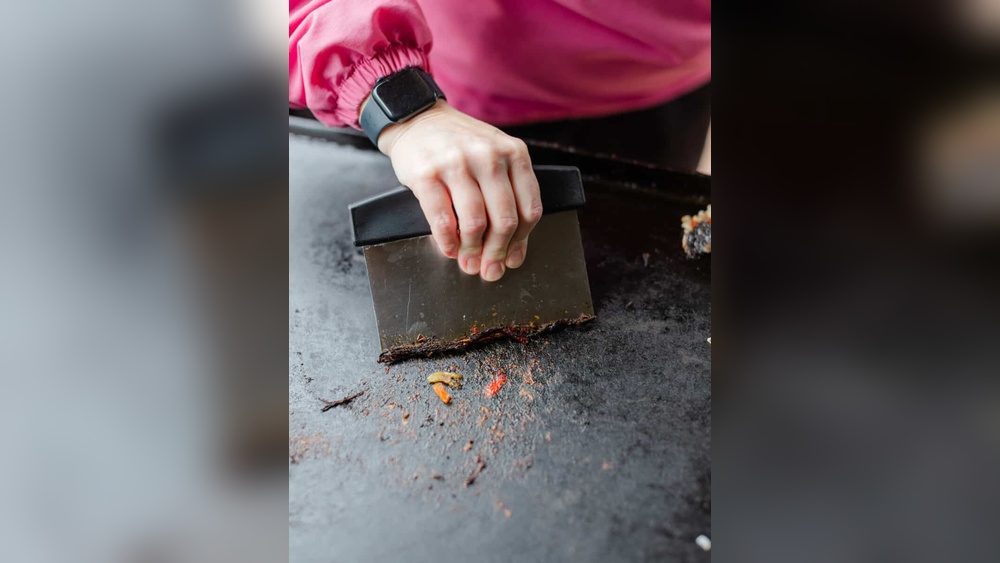
Hold a metal scraper firmly in your hand. Press it flat against the hot griddle surface. Slide it gently to lift food particles off the griddle. Work from one side to the other.
Scrape all the small bits and larger chunks. Keep the scraper angled slightly to avoid scratching. This tool is perfect for loosening stubborn debris without damaging the surface.
Push Debris To Grease Trap
After scraping, gather all the food scraps in one place. Use the scraper to push them toward the grease trap. The trap collects grease and debris for easy disposal.
Make sure no bits remain on the cooking area. Clearing the griddle completely prevents flare-ups and uneven heating. Dispose of the collected debris safely after cooking.
Steam Clean Stubborn Residue
Steam cleaning is a great way to remove stubborn residue from your Blackstone griddle. It uses hot steam to loosen stuck-on food bits. This method makes scraping easier and helps keep your griddle surface smooth. Follow these simple steps to steam clean effectively after cooking.
Add Small Amounts Of Water
Start by heating your griddle to high heat. Once hot, pour a small amount of water onto the surface. Just a few tablespoons will do. The water will instantly turn to steam. This steam softens the tough, burned-on food. Be careful to avoid the hot steam as it can cause burns.
Scrape While Steaming
Use a metal scraper to gently push the loosened residue into the grease trap. Scrape while the steam is rising for best results. The heat and moisture work together to lift stubborn bits. Repeat adding water and scraping until the surface feels clean. This ensures your griddle stays in top shape for the next cook.

Credit: www.youtube.com
Dry The Surface
Drying the surface of your Blackstone griddle is a key step after cleaning. It prevents rust and keeps the griddle ready for your next cook. A dry surface also helps maintain the seasoning and prevents food from sticking.
Proper drying means removing all moisture left from the steam cleaning stage. Moisture can cause damage and reduce the life of your griddle. Take your time to ensure the surface is completely dry before applying oil or storing.
Wipe With Paper Towels
Grab several clean paper towels. Use them to wipe the entire griddle surface. Press firmly to soak up water and any leftover grease. Change towels as they become damp. Keep wiping until towels come away dry and clean.
Ensure No Moisture Remains
Check the griddle closely for any wet spots. Look at corners and edges where water can hide. Use a dry cloth or paper towel to remove hidden moisture. Let the griddle air dry for a few minutes if needed. Only proceed to oil the surface once it is fully dry.
Apply Protective Oil
Applying a protective oil layer is a key step after cleaning your Blackstone griddle. This oil shields the surface from rust and keeps it seasoned. A well-oiled griddle stays smooth and ready for your next cook. The right oil and proper application make all the difference.
Choose The Right Cooking Oil
Pick an oil with a high smoke point to avoid burning. Good choices include canola, avocado, or grapeseed oil. These oils form a strong, protective coating. Avoid butter or olive oil because they burn easily and leave sticky residue.
Spread A Thin, Even Coat
Pour a small amount of oil onto the griddle. Use a clean paper towel to spread it evenly. Cover the entire cooking surface with a thin layer. Too much oil can create sticky spots or attract dirt. A light coat protects without affecting your next meal’s flavor.

Credit: www.youtube.com
Cool And Cover
After cleaning your Blackstone griddle, the next important step is to cool and cover it properly. This helps protect the surface and keeps it ready for the next use. Cooling allows the griddle to settle safely, while covering prevents dust, dirt, and moisture from damaging the cooking area.
Taking care at this stage extends the life of your griddle and keeps it in great condition. Follow these simple steps to cool and cover your Blackstone griddle correctly after cooking.
Turn Off Burners
First, switch off all burners on your griddle. This stops the heat source and prevents overcooking or burning the surface. Turning off the burners lets the griddle cool down gradually. Avoid pouring water or touching the hot surface during this time to prevent injury or damage.
Use A Lid Or Cover
Place a lid or cover over your griddle once it cools slightly. A cover blocks dust, insects, and moisture from settling on the cooking surface. Choose a cover made for Blackstone griddles or use a heavy-duty grill cover. Ensure it fits well to seal the griddle completely. Covering keeps your griddle clean and ready for the next cook.
Avoid Common Mistakes
Cleaning your Blackstone griddle the right way keeps it working well for years. Avoiding common mistakes saves time and prevents damage. Follow these simple tips to protect your griddle and keep it ready for your next cook.
Skip Harsh Soaps
Harsh soaps remove the seasoning on your griddle’s surface. This seasoning creates a natural non-stick layer. Use plain water and scrapers instead of soap. Soap can cause rust and make food stick more.
Don’t Use Excess Water
Too much water can cause rust on the griddle. Add only a few tablespoons to steam clean. Water helps lift stuck bits but keep it minimal. Always dry the surface completely after cleaning.
Clean While Hot
Cleaning your griddle while it is hot makes the job easier. Heat loosens food and grease quickly. Use a scraper to remove debris as it softens. Be careful to avoid burns and use heat-resistant tools.
Tips For Maintaining Seasoning
Maintaining the seasoning on your Blackstone griddle keeps it non-stick and rust-free. Proper care ensures better cooking results and a longer griddle life. Follow simple tips to preserve that dark, smooth seasoning layer after each use.
Regular Cleaning Routine
Clean your griddle after every cook to protect the seasoning. Heat the surface, scrape off food and grease, then steam-clean stuck bits with water. Wipe the surface dry using paper towels. This routine stops buildup that can damage the seasoning layer. Regular cleaning keeps the surface smooth and ready for the next meal.
Importance Of Oil Layer
After cleaning, apply a thin oil coat to the griddle. Use oils with high smoke points like canola or avocado oil. This oil layer prevents rust and seals the seasoning. Spread oil evenly using a paper towel or cloth. A good oil layer keeps the griddle shiny and non-stick for future cooking.
Frequently Asked Questions
What Is The Best Way To Clean A Blackstone Griddle After Cooking?
Heat the griddle, scrape debris to the grease trap, add water to steam-clean stuck bits, wipe dry, and oil the surface to prevent rust.
Should I Put Oil On My Blackstone After Cooking?
Yes, apply a thin layer of oil after cooking to prevent rust and maintain seasoning on your Blackstone griddle.
Can I Use Dawn Dish Soap To Clean My Blackstone Griddle?
Avoid using Dawn dish soap on your Blackstone griddle. Soap can strip its seasoning and damage the surface. Clean your griddle with hot water, a scraper, and a light oil coating instead. This method maintains seasoning and prevents rust effectively.
How To Remove Sticky Residue From A Griddle?
Heat the griddle, scrape off residue with a metal scraper, add a little water to steam-clean, wipe dry, then oil the surface to prevent rust.
Conclusion
Cleaning your Blackstone griddle right after cooking keeps it ready for next time. Heat, scrape, steam, wipe, and oil—the simple routine protects your griddle. Regular care stops rust and builds a smooth cooking surface. Remember, a clean griddle cooks better and lasts longer.
Stay consistent with these steps for best results. Enjoy cooking on a griddle that looks and works great every time.