How To Clean Weber Slate Griddle: Quick Care Guide
Scrape while warm, wipe, deglaze with water, mild soap if needed, dry, oil.
If you want to learn how to clean Weber Slate Griddle the right way, you’re in the perfect place. I’ve cleaned dozens of griddles, including Weber’s Slate models, in home kitchens and on the road for events. Below, I break down what works, what fails, and how to keep your cooktop smooth, safe, and ready for any meal.

What Makes the Weber Slate Griddle Different
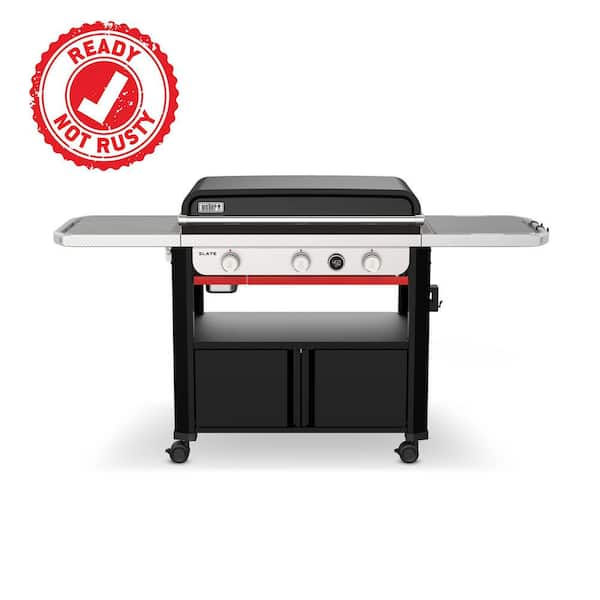
The Weber Slate Griddle uses a rust-resistant carbon steel cooktop. It is tougher than nonstick and needs less seasoning than raw steel. That means easier cleaning and fewer worries in humid climates.
Still, grease, sugars, and burnt bits can build up. You need the right method to protect the finish. If you came here for how to clean Weber Slate Griddle without damage, you’ll find clear steps below.
Always check your model’s manual. Some cleaners are not advised for coated steel. When in doubt, test a small corner first.

Tools and Supplies You’ll Need
Gather your kit now so cleanups are fast and stress-free.
- Grill scraper with a flat edge and no sharp corners
- Non-scratch nylon scrub pad or soft sponge
- Paper towels or microfiber cloths
- Warm water in a squeeze bottle
- Mild dish soap for grease and sugar stains
- High smoke-point oil like canola, avocado, or grapeseed
- Heat-resistant gloves for safety
- Small bucket or bowl for rinse water
- Food-safe degreaser, only if the manual allows
With these tools, how to clean Weber Slate Griddle becomes easy and repeatable.
Step-by-Step: Daily Clean After Cooking
Use this quick routine every time you cook. It takes five minutes and prevents big messes later.
- Warm the surface. Turn burners to low for 2 to 3 minutes. Heat loosens grease and stuck bits.
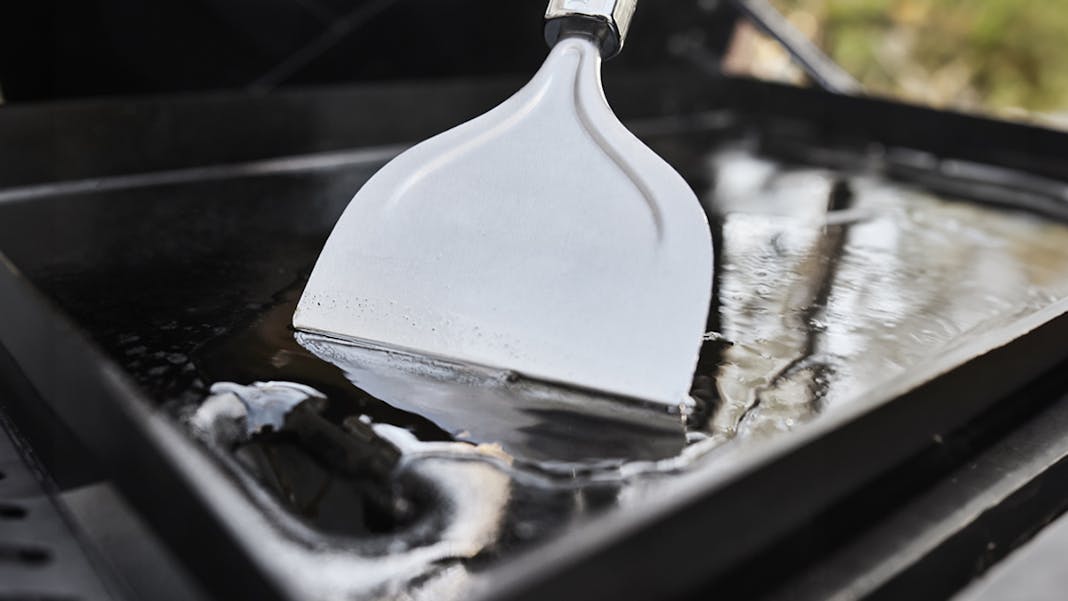
- Scrape. Push debris toward the grease channel using a flat scraper.
- Deglaze. Squeeze a bit of warm water on the area. The steam lifts residue fast.
- Wipe. Use paper towels or a microfiber cloth to remove liquid and loosened grime.
- Spot clean. For sticky patches, add one drop of mild soap to a damp pad. Scrub gently. Follow with a water wipe until no soap remains.
- Dry. Wipe until the surface is bone dry. Moisture invites rust, even on rust-resistant steel.
- Protect. Rub on a thin film of oil. Wipe off the extra. You want a sheen, not puddles.
- Empty and wash the grease tray. Let it dry before you reinsert it.
Follow this and you will never stress about how to clean Weber Slate Griddle after a big cook.

Weekly Deep Clean and Reconditioning
A weekly reset keeps the surface even and reduces sticking.
- Heat to warm, not hot. You should feel heat but not steam.
- Add a small amount of warm water with a drop of dish soap.
- Scrub with a non-scratch pad using light pressure.
- Wipe with clean water until no soap remains. Soap left behind can make food stick.
- Dry fully with towels.
- Apply a paper-thin coat of high smoke-point oil.
- Heat on low for 3 to 5 minutes to set that micro-layer.
- Cool, then buff with a dry towel.
This deep clean is the backbone of how to clean Weber Slate Griddle for long life.
Tough Messes: Burnt-On Bits, Sticky Spots, and Stains
Burnt sugar, marinades, and sauces can get stubborn. Use a gentle ladder of force.
- Use steam first. Add warm water and let it sit for 30 seconds. Scrape and wipe.
- Try mild soap next. A few drops on a damp pad can cut sugar glaze and cheese.
- Go to a food-safe degreaser only if the manual allows. Rinse with water after.
- Avoid steel wool or metal scouring pads. They can scratch or strip the finish.
- For odor carryover, wipe with a cut lemon, then water, then dry and oil.
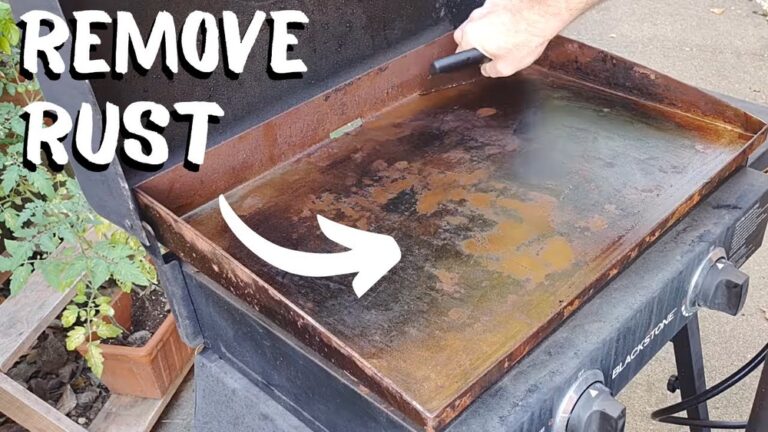
- For light rust or orange blush, make a baking soda paste. Rub with a nylon pad. Rinse, dry, and oil.
If you wonder how to clean Weber Slate Griddle after a big teriyaki session, this is the safe plan.

Do You Need to Season a Weber Slate Griddle?
Weber’s Slate surface is rust-resistant. It is more forgiving than raw carbon steel. You can cook on it with minimal seasoning.
Still, a thin oil film after cleaning helps. It keeps water off the surface and improves release. Use just enough to add a satin look, then wipe dry. Heat on low for a few minutes to set. That is how to clean Weber Slate Griddle and keep it slick over time.
Safety, Warranty, and Common Mistakes to Avoid
Protect the cooktop and your hands with a few smart moves.
- Do not use oven cleaner, caustic chemicals, or bleach.
- Avoid aggressive abrasives and sharp metal tools on the cook surface.
- Do not shock a smoking-hot griddle with a flood of cold water. Use small amounts of warm water.
- Keep the grease tray clear. Overflow can cause flare-ups.
- Check your manual before using any new cleaner. This protects your finish and warranty.
Mistakes happen. If you over-scrubbed an area, clean it, dry it, and add a very thin oil coat. Then cook a simple batch of onions to rebuild slickness. That simple habit is part of how to clean Weber Slate Griddle the right way.

Storage and Weather Care
Outdoor gear takes a beating. A few habits prevent trouble.
- Let the griddle cool, then cover it. A fitted cover blocks rain and dust.
- Keep it under a roof or awning if you can.
- After wet weather, do a quick warm-up, wipe dry, and oil.
- Before long storage, deep clean, dry, and add a very light oil film.
If you live near the coast, clean and oil more often. Salt air is rough on steel. Staying ahead is key for how to clean Weber Slate Griddle in coastal zones.

Troubleshooting: Quick Fixes From the Field
I’ve run my Slate through busy brunches and tailgates. Here’s what fixes common issues fast.
- Food sticks. The surface is dirty or too dry. Deep clean, then use a thin oil film and proper preheat.
- Excess smoke. You used too much oil. Wipe the extra or lower the heat.
- Dark streaks. This is normal patina. If sticky, deep clean and recondition.
- Flaking patches. That is burnt oil, not metal. Deep clean with warm water and a nylon pad. Rinse, dry, oil, and heat on low.
Keep this list handy when you think about how to clean Weber Slate Griddle under pressure.
Frequently Asked Questions of how to clean weber slate Griddle
Can I use soap on a Weber Slate Griddle?
Yes, mild dish soap is fine in small amounts. Rinse with clean water wipes, then dry and oil lightly.
How often should I deep clean the Slate griddle?
Do a quick clean after every cook and a deeper clean weekly. If you cook heavy sauces or sugar, deep clean more often.
What oil is best after cleaning?
Use a high smoke-point oil like canola, avocado, or grapeseed. Apply a thin film, wipe excess, and set it with low heat.
Is it okay to use a grill brick or pumice stone?
Avoid abrasive stones unless your manual says it’s safe. Use a nylon pad first to protect the finish.
How do I prevent rust on a Slate griddle?
Dry it fully after cleaning and add a very thin oil coat. Use a cover and store out of rain when possible.
Can I pour ice on the griddle to steam clean?
Small amounts of warm water are safer. Big thermal shocks can stress metal and are not needed.
What should I do if I see rainbow discoloration?
That is normal heat tint on steel. If it feels sticky, do a gentle deep clean and re-oil.
Conclusion
Clean while the griddle is warm, use gentle tools, dry well, and oil light. That simple cycle locks in a smooth surface and keeps flavors pure. If you follow these steps, how to clean Weber Slate Griddle becomes quick, easy, and stress-free.
Put this guide to work on your next cook. Try the daily routine tonight, then schedule a weekly deep clean. Want more tips and recipes for your Slate? Subscribe, share your questions in the comments, and tell me what you’re cooking next.