What A Blackstone Griddle Looks Like After Seasoning: Guide
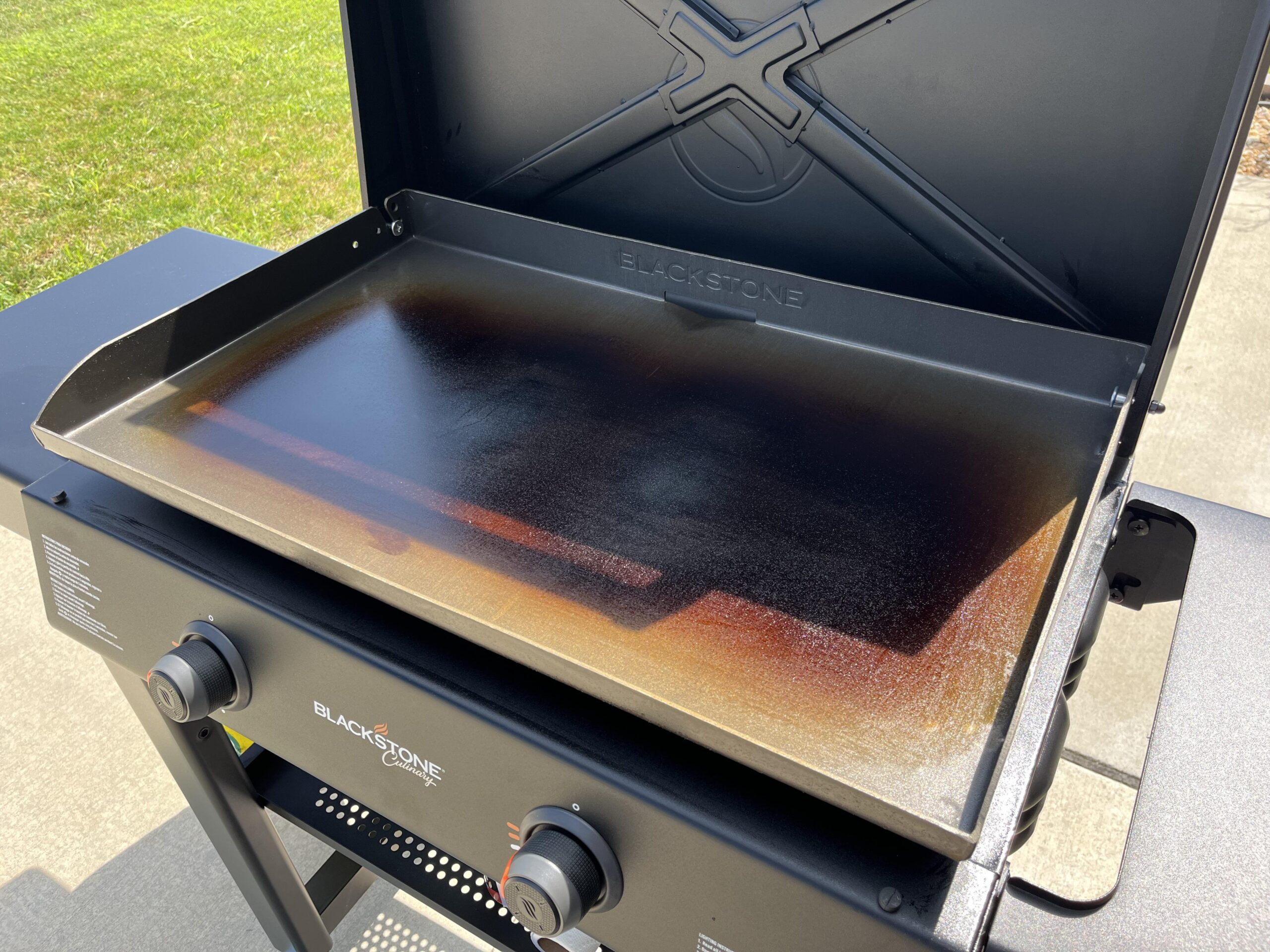
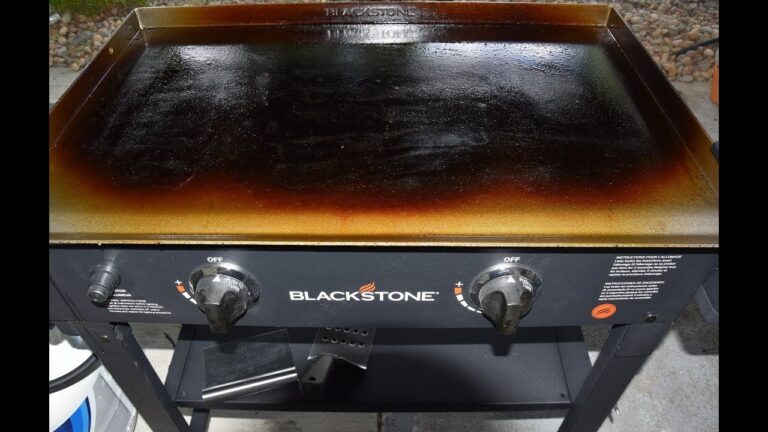
Deep black, slightly glossy, with a smooth, even, nonstick patina across the surface.
If you have wondered what should a blackstone griddle look like after seasoning, you’re in the right place. I’ve seasoned more griddles than I can count, and I’ll show you exactly what a perfect finish looks like, how to test it, and how to keep it that way. This guide blends hands-on tips with expert-backed facts, so you can trust the results and enjoy every cook.
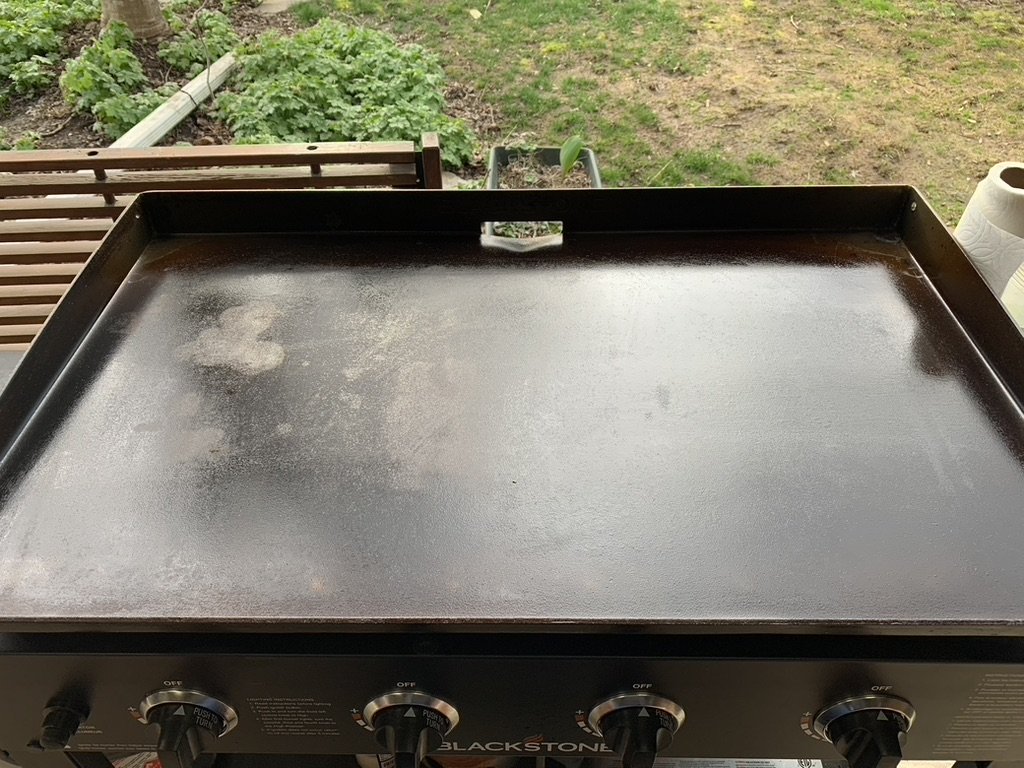
What should a Blackstone griddle look like after seasoning? The visual checklist
When someone asks what should a blackstone griddle look like after seasoning, I give a simple checklist. You want a deep, even black finish with a light satin sheen. The surface should feel smooth under a spatula and slick under a paper towel. Food should release clean.
Use this checklist as your go/no-go test:
- Color looks black or very dark brown, not gray. This shows good polymerization.
- Finish has a soft gloss, not mirror shiny and not dull. Think satin paint.
- Feel is smooth and consistent. No tacky spots, no gritty patches.
- Oil beads thinly and spreads fast. That means a sealed surface.
- Eggs slide with little or no force. A turner should glide.
If you’re still unsure what should a blackstone griddle look like after seasoning, picture a well-used cast iron pan with a dark, even patina. That is the target look on a griddle too.

Color stages and patina progress on a Blackstone
Seasoning builds in layers. The first coats often look splotchy. Do not panic. Steel shifts from raw silver to straw, bronze, chocolate, and finally near black. The center may darken fastest. Edges and corners can lag a bit.
Expect a mottled look in the first two cooks. By the third or fourth round, spots should even out. After a few real meals, the whole top turns deep brown to black. If you ask what should a blackstone griddle look like after seasoning on day one, the honest answer is “in progress.” The true finish comes with thin coats and heat cycles.
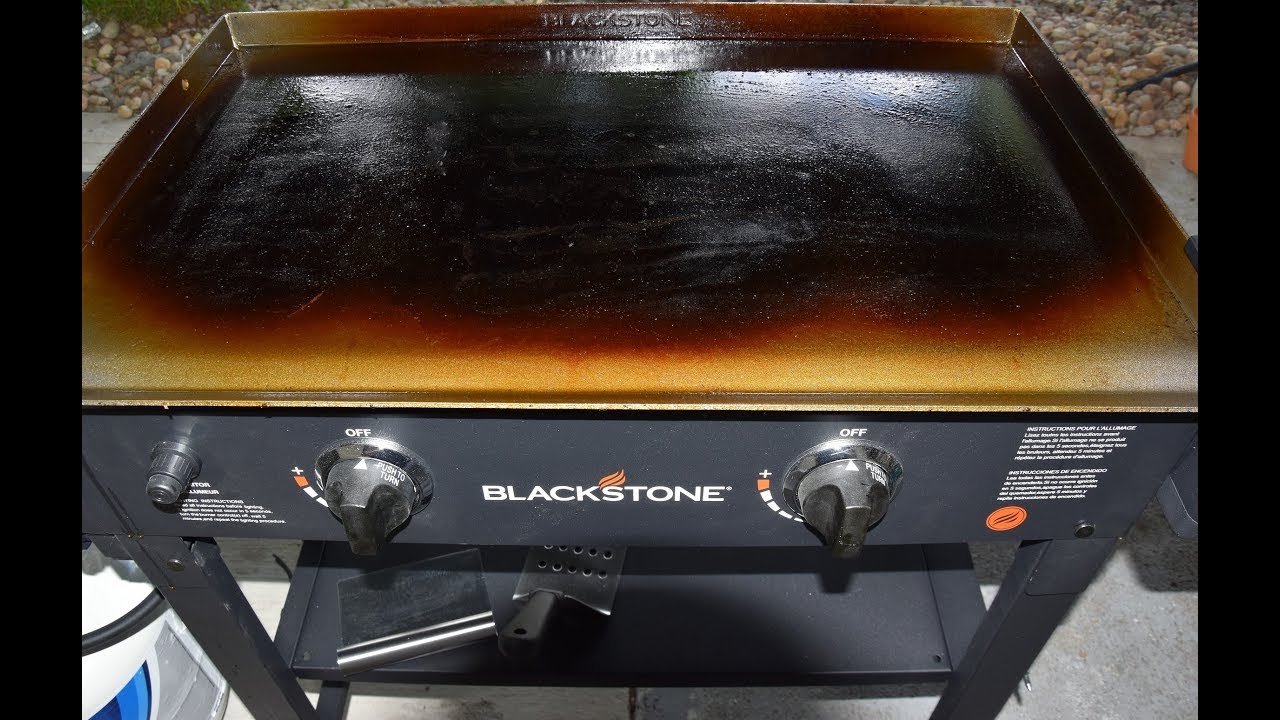
Texture and sheen: touch, feel, and light test
A seasoned top should not feel sticky. It should not feel rough. Run a clean paper towel across the surface. It should glide and come back mostly clean.
Try this simple light test:
- Stand to the side and tilt your head. You should see a soft, even shine.
- If the top looks wet after cooling, it may be oily. Wipe and heat again.
- If it looks dull gray, keep seasoning. Thin coats fix it.
Your spatula should move like it’s on ice. That slick glide is what should a blackstone griddle look like after seasoning, translated into feel.
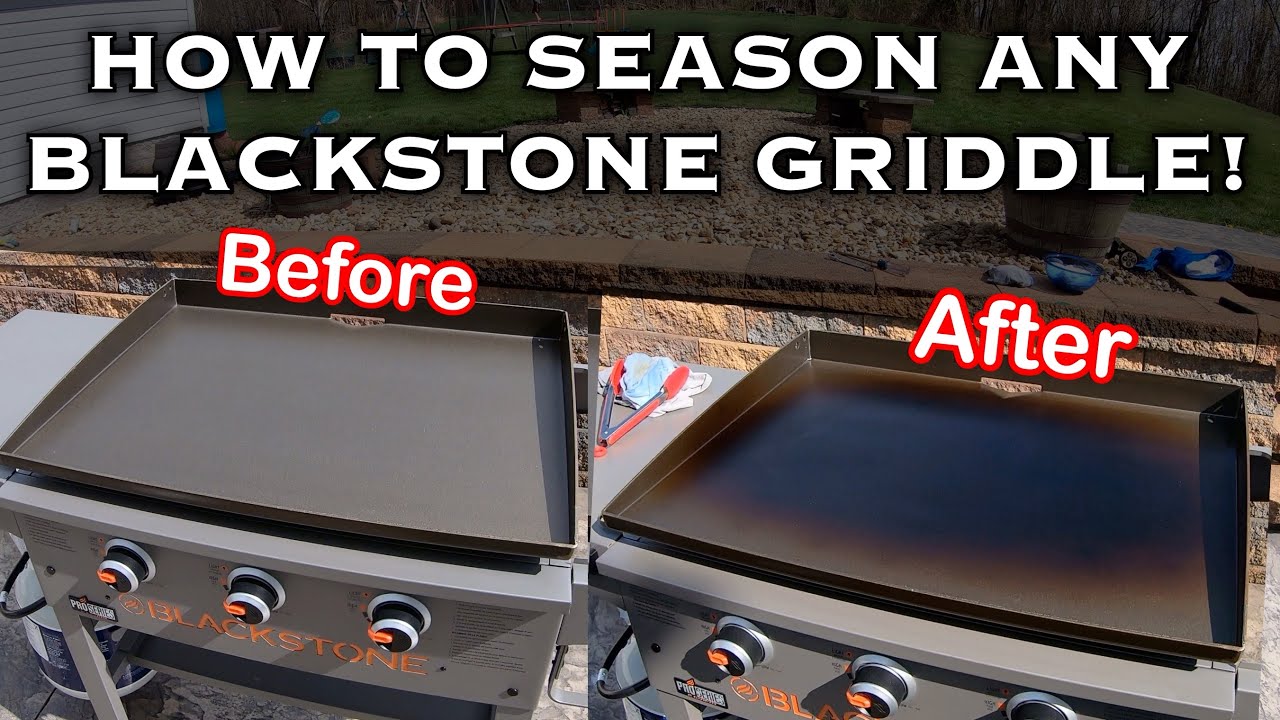
Simple performance tests you can try today
Looks matter, but performance seals the deal. These quick tests confirm the patina.
- Water bead test: Flick a few drops on a hot griddle. Water should form tiny balls and dance. That shows the top is closed and smooth.
- Egg test: Crack one egg on medium heat. The whites should not glue down. The egg should release with a gentle nudge.
- Pancake swirl: Pour a small circle. Batter should set fast and lift clean.
- Burger crust: Smash a ball of beef on high heat. It should crust, not stick.
If these work, you have the look and the performance you want.
Problems that mean keep seasoning, and how to fix the look
Small issues are normal. The fix is often a thin coat and heat.
What you might see and what to do:
- Sticky or gummy patches: You used too much oil. Burn it off on high heat. Then add one very thin coat and heat to smoke.
- Rainbow sheen: You are seeing heat tint on steel or hot oil. Keep cooking. It fades as the patina builds.
- Splotchy brown and gray: You need more cycles. Add a thin coat. Heat to smoke. Repeat once or twice.
- Rust freckles: Moisture got in. Scrub with oil and a chainmail scrubber or nylon pad. Wipe clean. Reseason thin.
- Flaking or chipping: Old “too-thick” coats can lift. Strip the loose area with a scraper while hot. Reseason in micro layers.
If you wonder what should a blackstone griddle look like after seasoning when it’s perfect, remember this: even color, light gloss, no tack, and easy release. Anything else needs one more thin pass.
How to season to achieve that look
A great patina needs thin coats, high heat, and patience. Thin is the secret.
Follow these steps:
- Clean and dry: Heat the griddle to drive off water. Let it cool a bit.
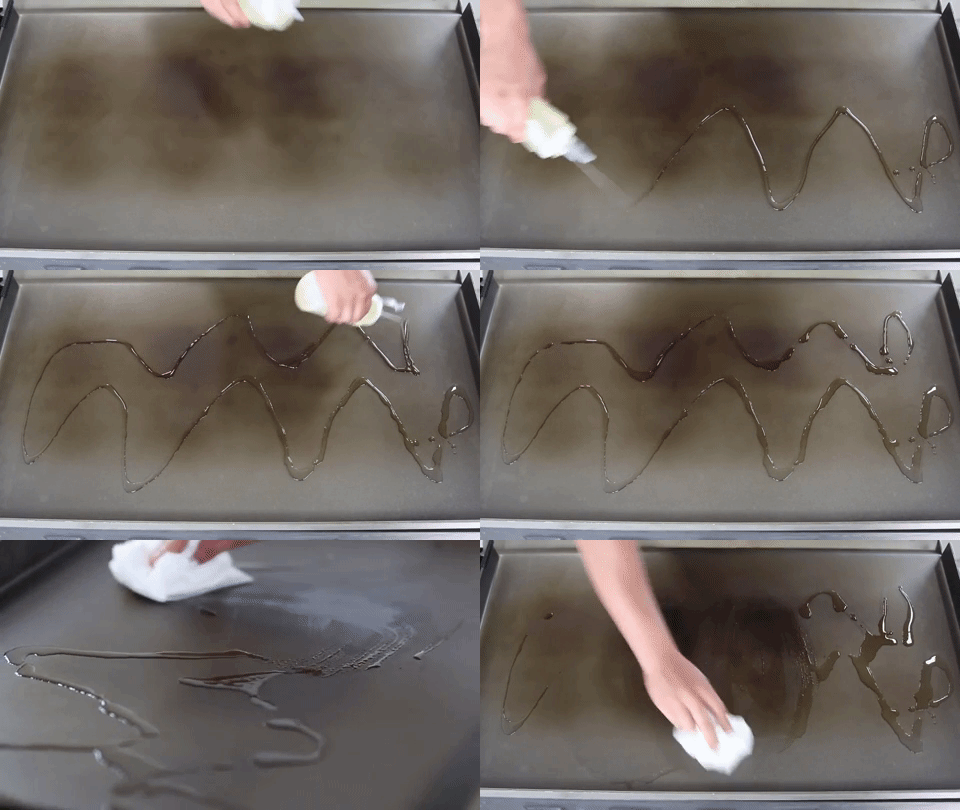
- Apply a thin film of oil: Use high-smoke-point oil. Canola, grapeseed, rice bran, or avocado oil work well.
- Wipe until it looks almost dry: Use a paper towel or cotton cloth. No pools. No streaks.
- Heat past smoke: Run burners on high until smoke thins out. Keep it there 10–15 minutes.
- Repeat 3–5 times: Keep coats very light. More thin beats one thick.
- Finish with a conditioning coat: After the last burn, while warm, wipe on a whisper-thin film.
Notes on oil:
- Flaxseed oil can build fast but may be brittle. I use canola or grapeseed for a tough, flexible layer.
- Avoid butter or low smoke oils for base layers. Save them for cooking.
Do this, and you will get what should a blackstone griddle look like after seasoning: dark, slick, and tough.
Routine after-cook care to maintain the look
Your patina grows with use. Care keeps it strong and smooth.
Do this after each cook:
- Scrape while warm: Push debris to the grease trap. Use a flat scraper.
- Steam clean if needed: A splash of water on hot steel lifts stuck bits. Scrape again.
- Wipe a micro coat of oil: One teaspoon covers a 36-inch top. Wipe until dry.
- Cool and cover: Keep moisture off. Use a cover in humid areas.
Skip harsh soap. Avoid soaking. If you store outside, check for dew or rain sneak-ins. A light oil film stops rust.
Real-world notes from my cooks
I learned this the hard way. My first Blackstone looked streaky and sticky. I had used too much oil. Burgers stuck. Eggs tore. I stripped the sticky spots, then did four thin coats. The change was night and day.
On a busy weekend, I ran a “three-test” habit. Water bead, egg slide, pancake lift. If all three passed, I knew service would be smooth. That rhythm helped me lock in what should a blackstone griddle look like after seasoning in a real kitchen, not just in theory.
One more tip. The wind matters. It can cool corners and cause pale spots. Block the wind or rotate pans across zones to even heat during seasoning.
Why the look matters for flavor, heat, and nonstick
That dark, satin surface is not just pretty. It is a hard film of polymerized oil. It resists water. It spreads heat. It helps browning. It also protects the steel from rust.
A good patina means less stuck food and less scraping. Your burgers get a better crust. Your veggies char, not steam. Your pancakes get even color. If you care about results, aim for what should a blackstone griddle look like after seasoning and protect it every time.
Frequently Asked Questions of what should a blackstone griddle look like after seasoning
How many seasoning layers do I need for a good look?
Three to five thin coats is the sweet spot for most tops. Keep cooking, and the patina will deepen with every meal.
Can I cook right after the first seasoning?
Yes, but expect some splotches early on. The look and release improve a lot after the second or third round.
Which oil gives the best finish?
Use high-smoke oils like canola, grapeseed, rice bran, or avocado oil. They build a tough, flexible layer that resists flaking.
Why does my seasoned griddle look dull gray in spots?
Those spots need more heat cycles or thinner coats. Wipe on a micro layer of oil and burn it in until the smoke fades.
How do I know I’ve reached what should a blackstone griddle look like after seasoning?
You should see deep black color, a soft satin shine, and smooth glide. Eggs release with little force, and water beads and dances.
What if food still sticks after seasoning?
Heat may be too low, or your coats were too thick. Preheat longer, use a touch of oil when cooking, and add one more thin seasoning layer.
Do I ever need to strip and restart?
Only if you see heavy flaking, rust spread, or baked-on gunk. Spot-fix first. If that fails, strip the area and rebuild in thin coats.
Conclusion
A seasoned Blackstone should be dark, smooth, and lightly glossy, with easy food release. If your top is sticky, streaky, or pale, do one or two more thin, hot coats and test again. Thin layers, steady heat, and simple care will get you the exact look and feel you want.
Put these steps to work on your next cook. Share your progress, ask questions, or drop your best tips in the comments. If this helped, subscribe for more practical griddle guides and recipes.